
Frontiers of Science Guild has funded a documentary on sensory deprivation
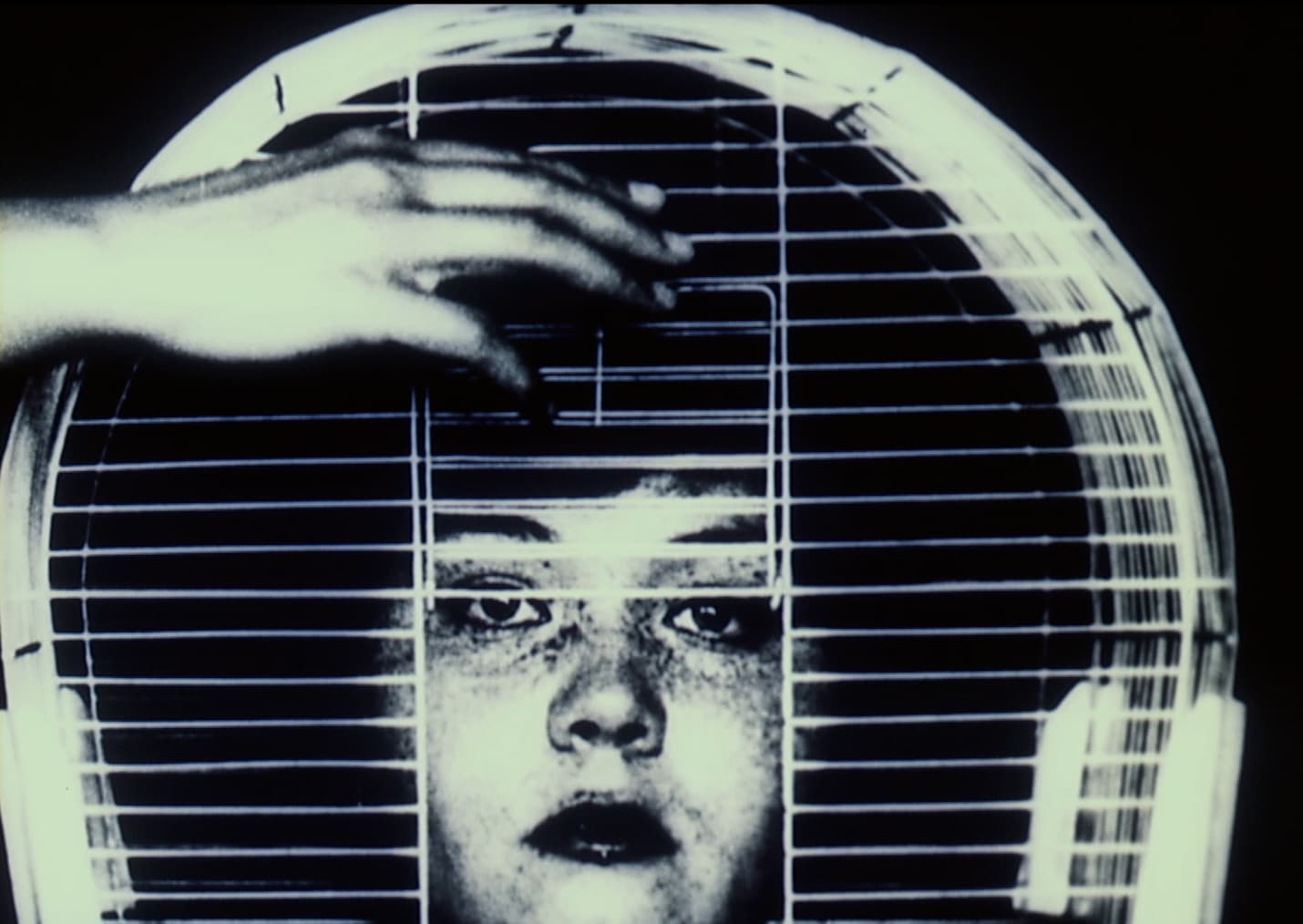
The documentary detective story "Strictly Sensory Deprivation" is an investigation, scientific experience and a movie without a script. Director Yulia Kiselyova explains why it was impossible to plan the shooting, why people were immersed in immersion beds and where the audience will be able to see this 51-minute picture.
In 1979, Tatyana Chivikova, a student at VGIK, made an educational work called "Strictly sensory Deprivation." The plot focuses on experiments that were classified in Soviet times, in which people were deprived of all external stimuli: sound, light, tactile support. It was impossible to document real experiments, and Chivikova recreated them using game methods. And then the movie disappeared.
Decades have passed. Director Yulia Kiselyova, a professional cinematographer with 20 years of experience, accidentally found out about the existence of this tape. And the most unpredictable filming process in her life began.
As Julia herself says, the film begins as an investigation.
We find out that there is such a job, we start looking for it, and we realize that it is nowhere to be found. We can't find it in VGIK , there's nothing on the Internet, and the libraries are empty," the director explains.
The last name of the operator became a clue. It turned out to be Sergey Astakhov is a famous master whose name has already spoken for itself. Thanks to this trail, the team eventually found the missing film and organized a screening in the House. I was surprised to find that a thousand registrations were scattered in a matter of minutes. Inspired by the topic, she decided to repeat the experiment on sensory deprivation, albeit in a toned-down version.
At the Institute of Biomedical Problems, the volunteers were placed in special immersion beds. Total darkness, no sounds — as much as possible with a modest budget — and no support for the body. Several hours without a single external signal.
The most interesting thing is what happens to a person deprived of all feelings," says the director. — The subjects told us about it .
These stories became the emotional core of the painting. The film features three participants in the experiment, as well as scientists who comment on the nature of panic: why the brain starts to "go crazy" when it no longer has anything to rely on.
Why take such studies on video if all the conclusions have long been described in scientific reports?
articles?
The director's answer is simple and categorical:
A scientific article is about dry facts and conclusions. And cinema appeals to emotions first of all. People don't go to the movies to learn something new, they go for emotions.
Therefore, instead of a lecture, the viewer gets a story with characters, plot and unpredictable twists.
Yulia emphasizes that cinema is always a movie, whether it's fiction, documentary, or popular science. There should be a plot, characters, and an emotional component everywhere.
One of the most unusual details of this picture is the complete absence of a script at the start.
We started searching for Civikova's film and simultaneously shooting this search. We didn't know anything. We didn't know if we would find the painting. We didn't know that Sergey Astakhov would turn out to be such a charismatic hero. We didn't know what would happen to the subjects during the experiment," the director lists.
Every next step could be the last. If the original film had not been found, the film simply would not have happened. But it has developed. And now, after two years of work, Yulia Kiselyova admits: "We are incredibly happy that the movie turned out."
When asked what the viewer should endure after watching, the director answers with unexpected delicacy:
"I don't think the audience owes us anything at all. We probably owe him more. We have to provide an attraction so that he doesn't spend 50 minutes in the hall in vain."
She hopes that everyone will find something different: someone will think, someone will experience, someone will just experience an emotion. "Cinema is usually a multi— layered art," adds Kiselyova.
"Strictly Sensory Deprivation" is not the director's first popular science project. She has already made eight films in this genre, many of which are devoted to neurophysiology: "The Brain. The second universe", "The brain. Evolution", tapes about neural interfaces and prosthetics.
In the near future, there will be a picture about mirror neurons, and then a space theme altogether: black holes and Academician Cherepashchuk. "I will continue to make popular science films," says Kiselyova, who has worked in documentaries for ten years and in science for the last ten.
There is no exact date for a wide release yet. Unlike some previous works, the film is not planned to be released. But sooner or later, anyone can see the picture on the nauchnoekino website.Russia. 51 minutes in the dark, without sound, without support — and with a story that you can't write in advance. Yulia Kiselyova's documentary detective proves that sometimes the strongest emotions are born where science stops, and just a person remains in the frame.