
We are not just observing the horizons, we are expanding them: how Frontiers of Science supported the main astrophysical conference of the year AGES-2026 in St. Petersburg
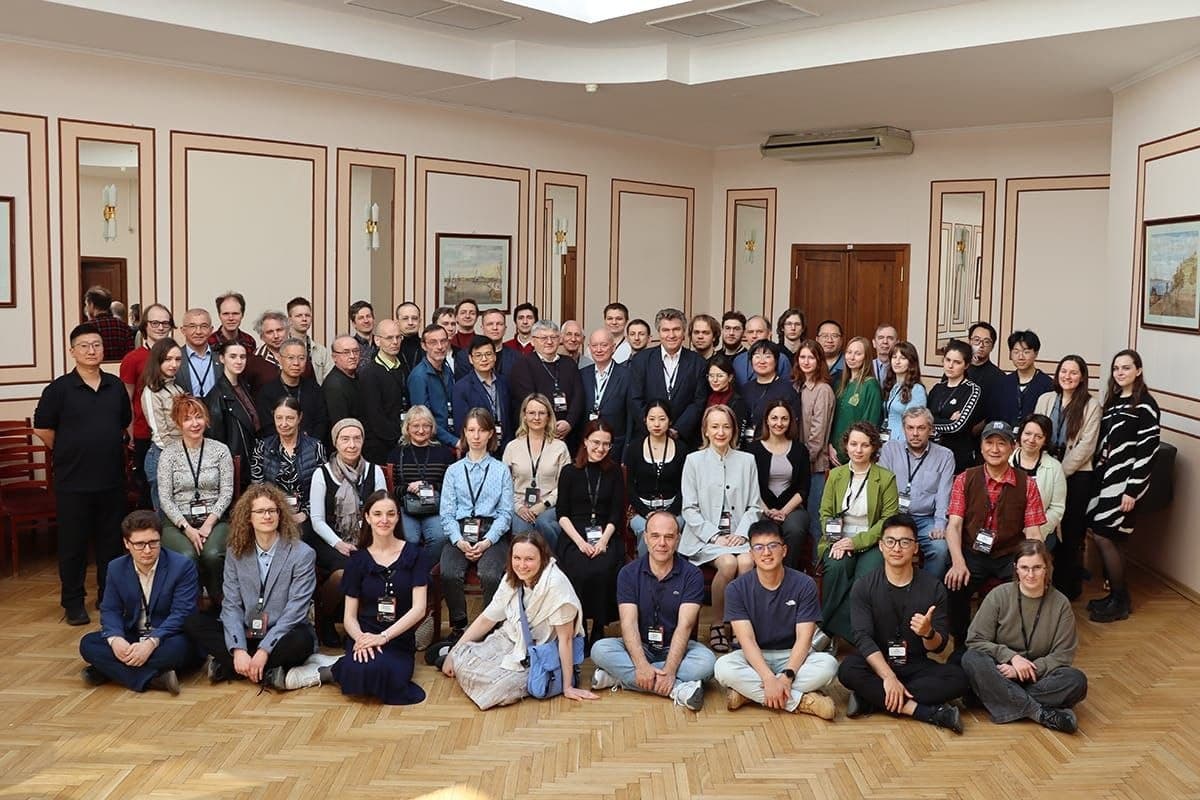
An international conference was held in St. Petersburg AGES-2026 ("Active galaxies and other issues of extragalactic astrophysics") was a conference held in person in St. Petersburg and devoted to modern problems of physics of active galactic nuclei (AGN) and related areas of extragalactic astrophysics. An event that brought together more than a hundred scientists from Russia, China, Serbia, the USA and Of Kazakhstan.
Who are the organizers: St. Petersburg State University, GAO RAS, Traffic police of Moscow State University and St. Petersburg Branch of the Russian Academy of Sciences.
The key goal is to bring observers and theorists together, discuss the latest results, and outline joint research projects.
The program was packed: plenary lectures, breakout reports, poster session. The performances were really world-class. Here are just a few striking names and themes:
- Luis C. Ho (Kavli Institute, Peking University, PRC) — on the birth and evolution of supermassive black holes in the cosmic dawn according to JWST data;
- M.R. Gilfanov (IKI RAS, Russia) — summed up the sky survey conducted by the SRG/eROSITA telescope in the eastern galactic hemisphere;
- S.A. Balashev (Ioffe Institute of Physics and Technology, Russia) — presented a study of the environment of quasars using absorption spectroscopy;
- L.Č. Popović (Belgrade Observatory, Serbia) — presented an overview of the work on AGN spectropolarimetry;
- Minfeng Gu (Shanghai Astronomical Observatory, China) — spoke about the research of narrow-line Seyfert type 1 galaxies (NLS1) — populations with low black hole masses and high accretion rate.
- Evgeny Derishev (IPF RAS, Russia) presented a generalization of the pair balance model in relation to the mechanism of generating high-energy blazar radiation.
- Sergey Troitsky (INR RAS, Russia) spoke about the mechanisms of neutrino generation in active galactic nuclei.
The reports of young scientists , postgraduates and students, should be noted separately. They set the tone for the next decade in astrophysics.

What projects were discussed?
In fact, AGES-2026 has become a meeting place for great reviews and theories:
— SRG/eROSITA (X-ray sky)
— MOJAVE (AGN jets on radio interferometers)
— WEBT (monitoring of blazars across the entire electromagnetic spectrum)
— DESI/MaNGA (spectroscopy and dynamics of galaxies)

The scientists did not just report the results, they outlined specific joint projects between Russian groups and colleagues from China, Serbia and Kazakhstan. And here another fact is important. AGES-2026 Conference It took place largely thanks to the partner support of BRICS Astronomy, the Frontiers of Science Guild and the AstroAlert project.